When digital systems work, they are invisible. But below the surface are people like Sia Møller. People who work every day to make sure potential problems are detected and dealt with before they grow.
She works as a kind of cyber firefighter: when an alert indicates that something may be going on, she and her colleagues investigate what has happened, whether any systems have been affected and whether action is needed.
But the job is not just about reacting when an alarm goes off. A large part of her time goes into preparing for situations you would rather never experience. The team improves the mechanisms that detect unusual behavior in the systems, practices response procedures and advises the rest of the organization on security. The goal is simple: to identify problems before they become serious.
When money needs to keep moving
The work has a clear purpose. After several years at other large companies, Sia has come to value just how much Bankdata matters to society.
Bankdata does not simply provide technology. Several of Bankdata's member banks are designated systemically important financial institutions in Denmark. Every time people and businesses trade with one another, money moves between banks. If those systems come to a standstill, large parts of society come to a standstill as well.
"When you go to work, you want to feel that what you do matters. If we do not do our job properly, it can have consequences for real people," she says.
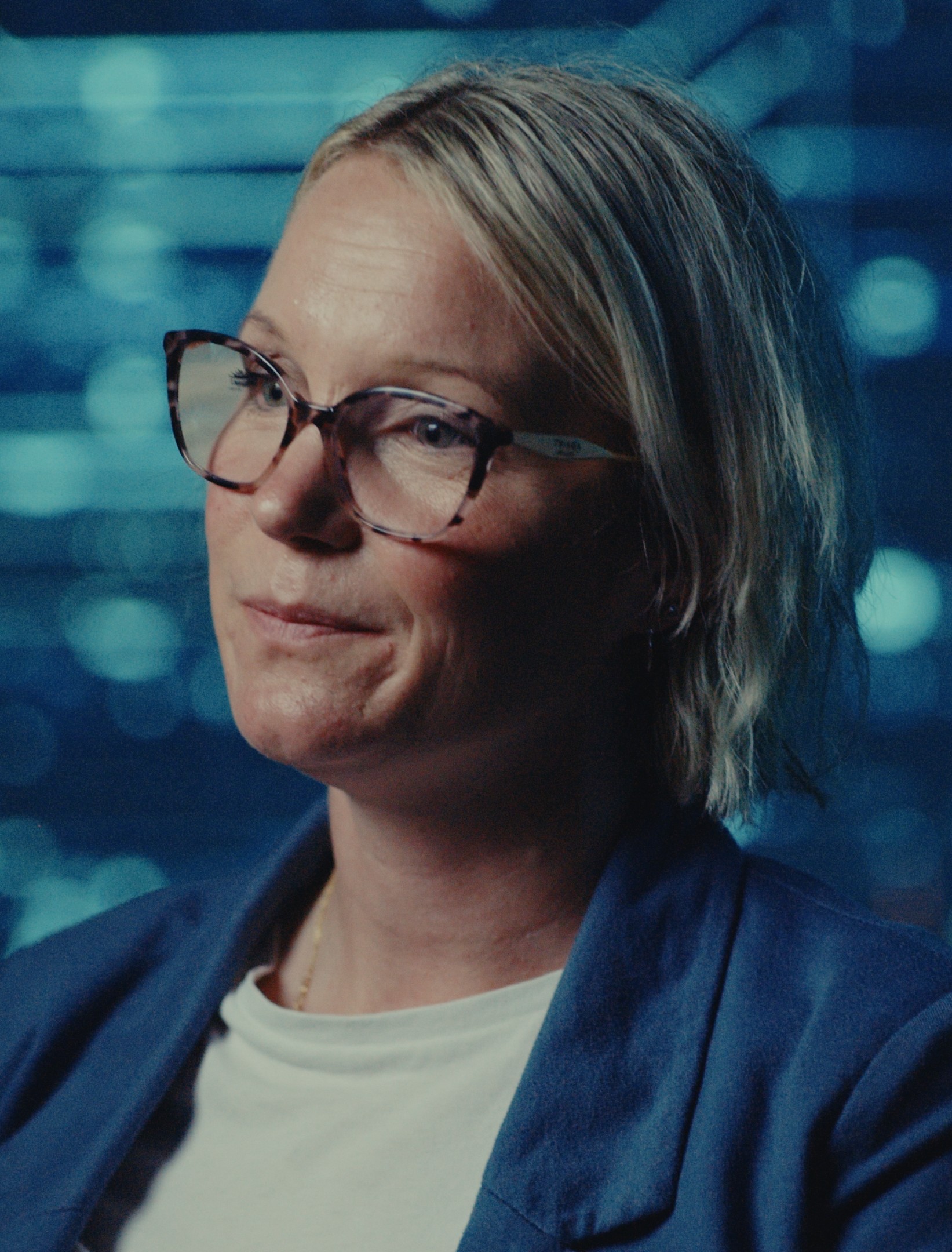
From dreams of journalism to digging into data
Her interest in technology has not followed a straight path. When she was younger, she was convinced she would become a journalist. But a job at a major telecoms company marked the beginning of a career in IT, where she quickly discovered that she had both an aptitude for technology and a talent for asking critical questions. She still uses that combination today.
"I actually wanted to be an investigative journalist. But much of what I do now is also about investigating and digging through large amounts of data to find out what happened."
Perhaps the direction was not entirely coincidental after all. Her father worked at Bankdata in the 1990s and helped develop parts of the software that still runs on the company's mainframe. And the family connection goes back even further: the first time Sia pulled herself up and stood on her own as a child, she did so against a computer in her father's office.
People are just as important as technology
Today, however, it is not the technology itself that motivates her most. It is the people. Both the millions of banking customers who depend on stable systems and the people she works alongside every day.
For Sia, the human dimension runs through cybersecurity itself. Most attacks begin with a person, a click, a call, an email, which is why she insists that security can never belong to one department alone.
"Security is not just the responsibility of the security department. If the rest of the company thinks that way, you will not have a secure organization."
That is why security needs to be built into new solutions from the beginning rather than added at the end. She also points to the high level of expertise around her and the inspiration that comes from talented people challenging one another.
The best days are the ones when a project comes together, a security improvement is implemented or a potential problem is stopped before it develops into anything serious. Because when Sia and her colleagues succeed at their jobs, nobody will notice at all.
"The ideal outcome is when the fire is put out before anyone even sees the smoke."

Are you looking for new challenges? See our open positions here